
Why Rallying Matters for Beginner Tennis Players

When someone first starts learning tennis, it is easy to focus on the individual shots.
How do I hit a forehand? Where should my feet go? How do I serve? Am I holding the racquet correctly?
These are all important beginner tennis skills. But one of the most valuable things a new player can learn is much simpler:
How to keep the ball in play.
Rallying is the foundation that brings the different parts of tennis together. It teaches a player to watch the ball, move into position, control their racquet, recover after each shot and prepare for the next one.
It also helps tennis begin to feel like a real game rather than a series of isolated feeds from a coach.
That is why learning how to rally in tennis matters so much for both children and adults.
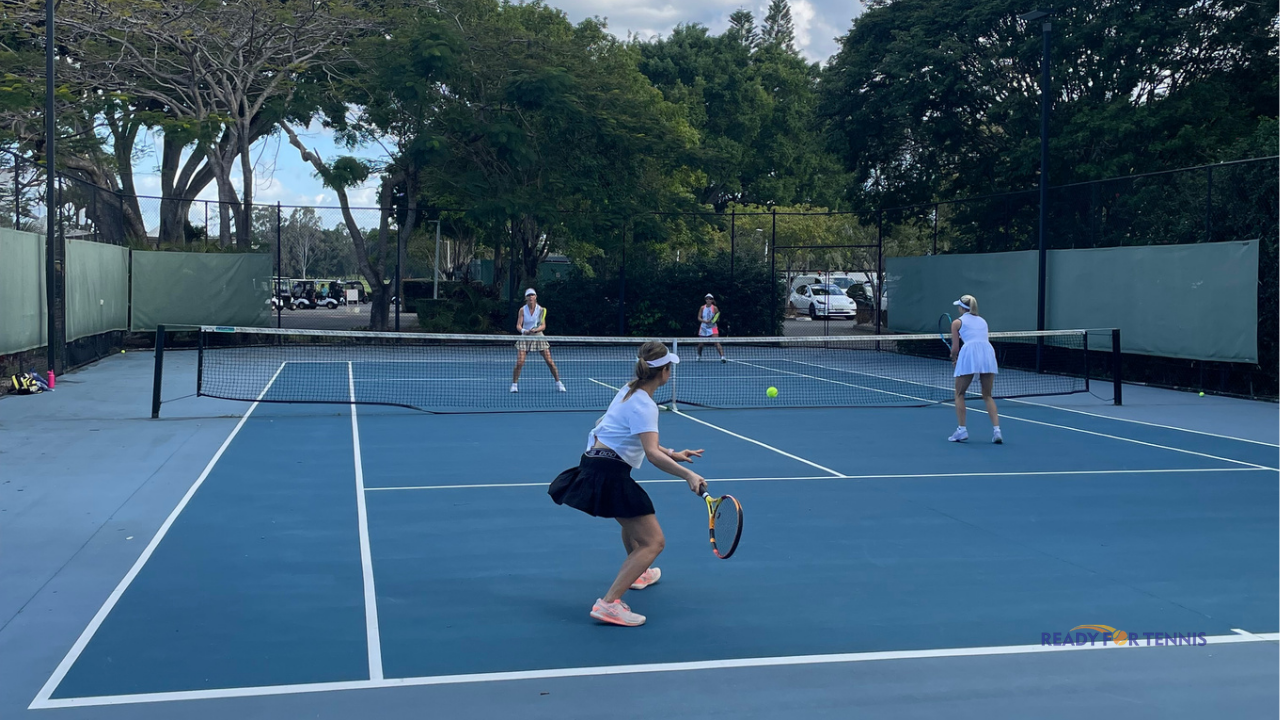
What does rallying mean in tennis?
A rally is a continuous exchange of shots between players.
For a beginner, a rally does not need to be fast, powerful or technically perfect. It might begin with two or three controlled shots over a smaller net using a slower ball.
The goal is simply to work with another player to keep the ball going.
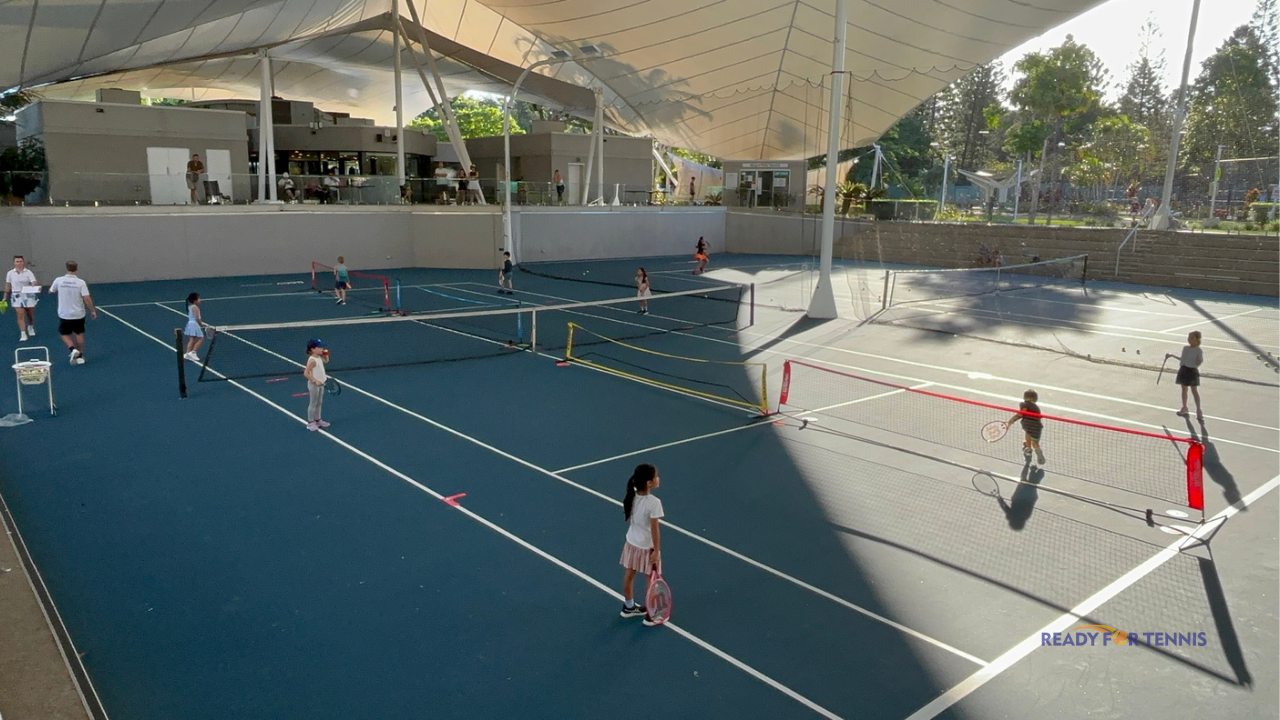
Tennis Australia's Hot Shots Tennis uses modified courts, racquets, tennis nets and low-compression balls to make this more achievable for developing players. Slower balls move more slowly, bounce lower and are easier to control, helping beginners develop their timing and confidence.
This is an important part of learning how to rally in tennis. Players should not have to begin on a full-sized court with a standard yellow ball if the equipment makes it too difficult to control the exchange.
The court and ball can be adjusted so the player has a genuine opportunity to succeed.
Rallying develops control before power
Many beginners naturally try to hit the ball hard.
It feels exciting when a shot travels quickly, but power without control often means the rally ends after one or two shots.
Rallying encourages a different mindset.
Instead of asking, “How hard can I hit this?”, the player begins asking:
- Can I control the direction?
- Can I give myself enough space over the net?
- Can I recover before the next ball arrives?
- Can I send the ball somewhere my partner can return it?
Tennis Australia describes consistency as the ability to keep the ball in the court. It also highlights the importance of developing technical and tactical skills together, because players need to make decisions within meaningful tennis situations rather than simply repeat a stroke in isolation.
That is what makes rallying such an effective form of beginner tennis practice. It gives every shot a purpose.

Rallying teaches rhythm and timing
Learning tennis is not only about where the racquet finishes.
Players must also learn when to move, when to prepare and when to make contact with the ball.
A rally provides that rhythm.
Watch.
Move.
Prepare.
Hit.
Recover.
Then repeat.
Over time, these movements begin to connect more naturally.
This is why many tennis consistency drills are based around cooperative rallying rather than trying to win the point immediately. The player gets repeated opportunities to track the ball, judge its bounce and adjust their movement.
For young players, Hot Shots introductory activities use rallying to develop tracking and locomotion skills. Children are encouraged to watch the ball, move in its direction and build up to continuous exchanges.
For adults, the same process can help reduce the feeling that every shot requires a new technical instruction. As the rally develops, the body begins to recognise the rhythm of the incoming ball.
What rallying builds in children
For children, learning how to rally in tennis can support much more than stroke development.
At the beginning, keeping the ball going is usually a cooperative challenge. Children need to watch their partner, control their shot and contribute to a shared outcome.
A successful rally is something they create together.
This can help build:
- hand-eye coordination
- tracking and movement skills
- patience and concentration
- cooperation
- confidence
- communication
- a sense of progress
The Hot Shots pathway introduces rallying through play-based activities, smaller courts and equipment suited to a child’s age and stage. The emphasis is on helping children develop key movement and tennis skills in an environment where success is achievable.
That sense of achievement matters.
A child who struggles to return one standard yellow ball after another may quickly decide they are “not good at tennis”. But when the court, equipment and activity are appropriate, they can experience what it feels like to build a rally.
They begin to see that improvement is possible.
Three shots become five.
Five become ten.
A ball that once felt too difficult becomes manageable.
Confidence grows because the child can see and feel their own progress.
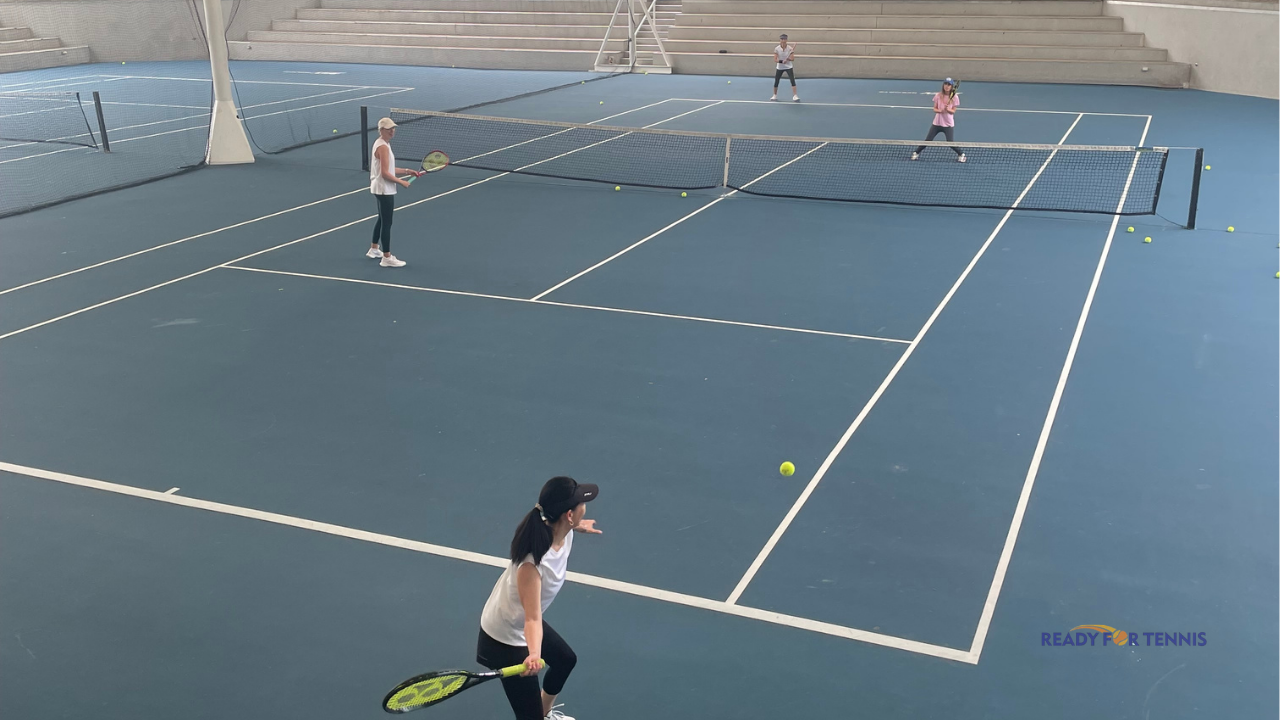
What rallying builds in adults
Adult beginners often arrive with a different challenge.
They may understand what they are supposed to do, but become frustrated when their body does not immediately produce the result they imagined.
Adults can also place more pressure on every shot.
They worry about making mistakes, slowing down the group or appearing less capable than the other players.
Rallying provides a more useful focus.
Instead of trying to hit the perfect forehand, the player works towards keeping the ball in play for one more shot.
That creates a simple, achievable objective.
It also encourages mindfulness on court. During a rally, the player has to remain present. They cannot change the previous shot or jump ahead to the next point. They need to track the ball that is coming towards them now.
This makes rallying both physical and mentally engaging.
Australian Government health information notes that finding an enjoyable physical activity can help people stay active, motivated and socially connected. Physical activity can support health and wellbeing whether it is done individually, with a friend or through a local sporting club. (Department of Health)
For many adults, a tennis rally becomes part of that experience.
It is movement, learning and problem-solving, but it is also connection.
A good rally can produce encouragement, laughter and a shared sense of achievement, even when nobody is keeping score.
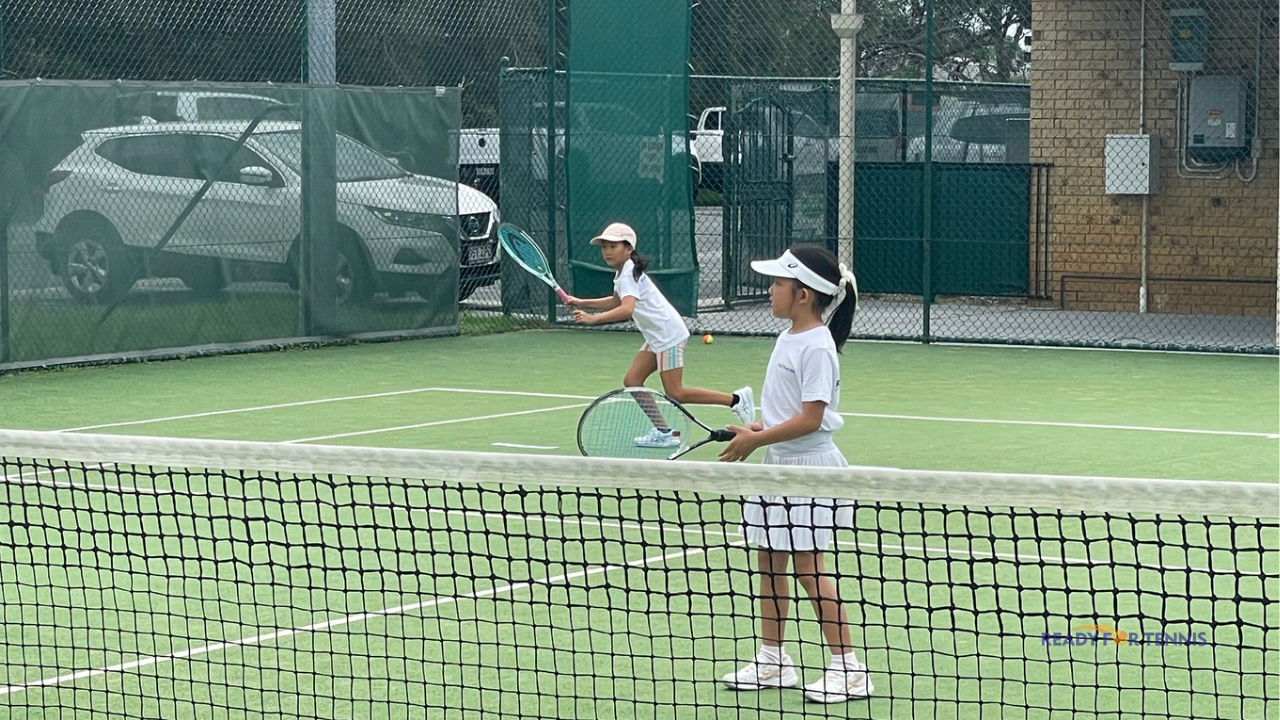
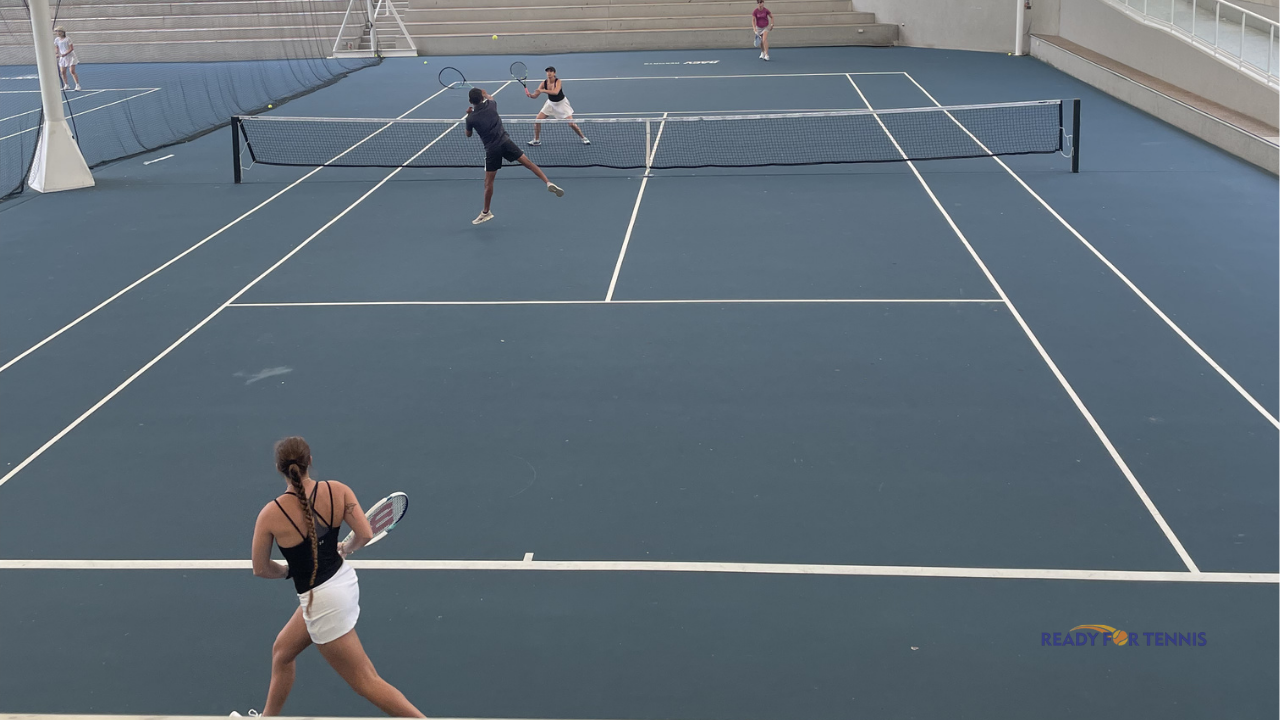
Rallying helps players learn to recover
One of the most overlooked beginner tennis skills is recovery.
New players often admire their shot instead of preparing for the next one. They hit the ball, remain where they are and then feel rushed when it comes back.
Rallying teaches players that every shot has two parts:
The hit and the recovery.
After contact, the player needs to regain balance, return towards an appropriate court position and prepare again.
This habit becomes essential as players progress towards points and match play.
A technically good shot is less useful if the player is not ready for the next ball.
Rallying develops patience and problem-solving
Tennis is a game of adjustments.
The ball does not arrive in exactly the same place every time. It can be higher, lower, faster, shorter or wider than expected.
During a rally, players gradually learn to solve these problems.
They adjust their feet.
They change the height of the shot.
They add more space over the net.
They slow the swing down.
They choose control instead of trying to finish the point too early.
These decisions form the beginning of real tennis awareness.
The player is no longer simply copying a movement. They are responding to the ball and learning what helps the rally continue.
Simple tennis consistency drills for beginners
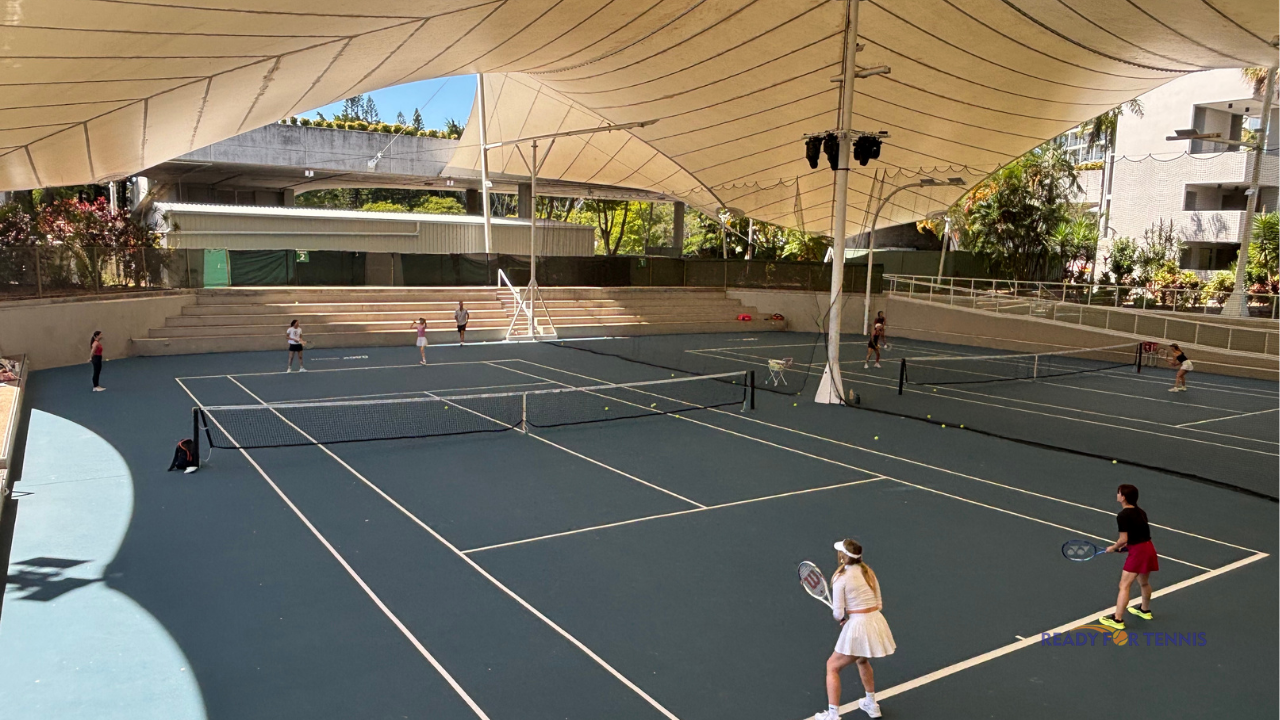
Beginner rallying practice should feel achievable.
A few simple ideas include:
- Start close to the net.
Players can begin inside the service boxes and gradually move backwards as their control improves. - Use a slower ball.
Red, orange or green low-compression balls give beginners more time to move and prepare. - Set a shared target.
Instead of competing, both players work together to reach five, ten or twenty shots. - Allow two bounces.
This gives very new players more time to track and position themselves. - Rally crosscourt.
The longer diagonal space provides a larger target and more room for the ball to land. - Focus on shape and control.
Players should aim for comfortable net clearance and a controlled ball rather than maximum pace.
These tennis consistency drills help make keeping the ball in play the main success measure.

Find your rally
Every player’s rally will look different.
For a young child, it may be three red-ball shots over a small net.
For an adult beginner, it may be the first time they complete ten relaxed forehands with a partner.
For a developing player, it may mean learning to recover, change direction or stay patient during a longer exchange.
The number is not the most important part.
What matters is what the player is building through the process: rhythm, control, movement, confidence, patience and connection.
Learning how to rally in tennis is not simply another skill to tick off.
It is where the different parts of the game begin to come together.
One ball at a time.
One return at a time.
One rally at a time.